






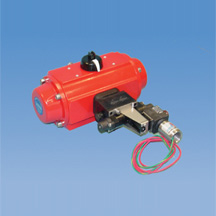
Plastic Pneumatic Actuator Options
Solenoid for Pneumatic Actuator
Solenoid valves are used to direct air flow into and out of pneumatic actuators. Solenoids are used to remotely control actuator position using an electrical signal. Typically they have two states: de-energized and energized. There are different air flow patterns for each state that controls which position the actuator will be in. Asahi/America's solenoids can be either 3-way (used with air-to-spring actuators) or 4-way (for air-to-air actuators). They feature a manual override which gives the ability to operate the solenoid without power, as well as a speed control to adjust the speed the actuator will open and/or close. The solenoid body is made from an annodized aluminum and features a IP65 body. The solenoid operates on 115VAC, other voltages and enclosure ratings are not available.